Two friends, one plan, and a promise
Here’s our story: a friendship that began at college in 2004 and grew into a plan to brew beer together, a bright star taken far too soon, and a promise that became a homebrewery named after both of us.


Our story
September 2004
We met at college
Alan and I were both born and raised in Hampshire, and we met at college in 2004. We fast became great friends, bonding over a love of cinema, theatre and the arts, and we stayed firm friends through everything that followed.
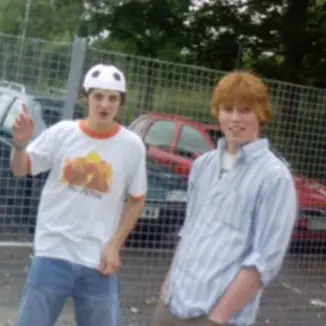
Darren and Alan in the college car park 2004 May 2020
Alan’s lockdown kit
During the COVID-19 lockdown, Alan bought himself a homebrewing setup: a Klarstein Füllhorn mash kettle and a Maischfest fermenter, plus all the bottles, buckets, syphons and hydrometers you need to get going. I was awfully jealous, and I couldn’t wait for lockdown to end so I could try his first brew.
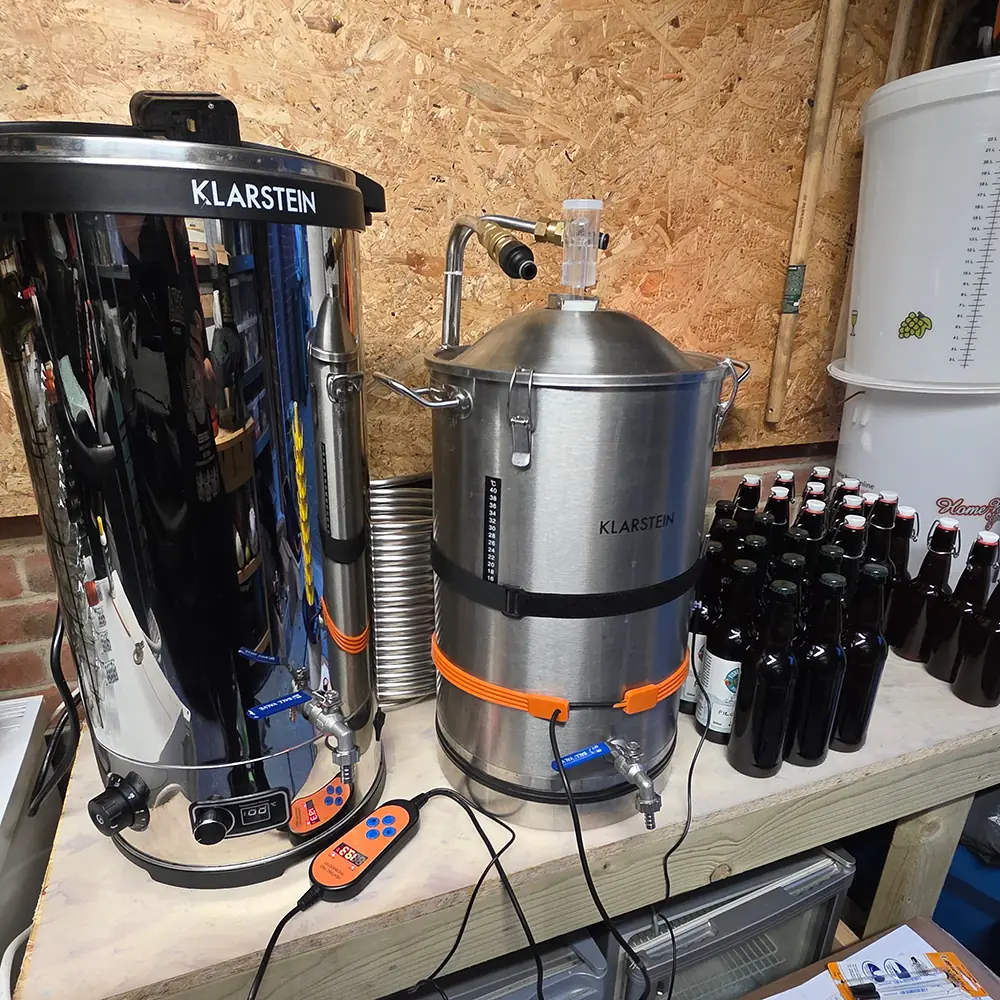
Alan’s Klarstein mash kettle and fermenter July 2025
A master plan in Weymouth, Dorset
On a camping trip in Weymouth in the summer of 2025, Alan and I finalised a master plan: we were going to brew beer together. Four days after that trip, we received the devastating news that Alan had passed away. After a time of grieving, Alan’s father gave me his brewing equipment and asked me to carry on with our plan. I vowed to see it through, and Fisher & Forbes Brewing Co was born.
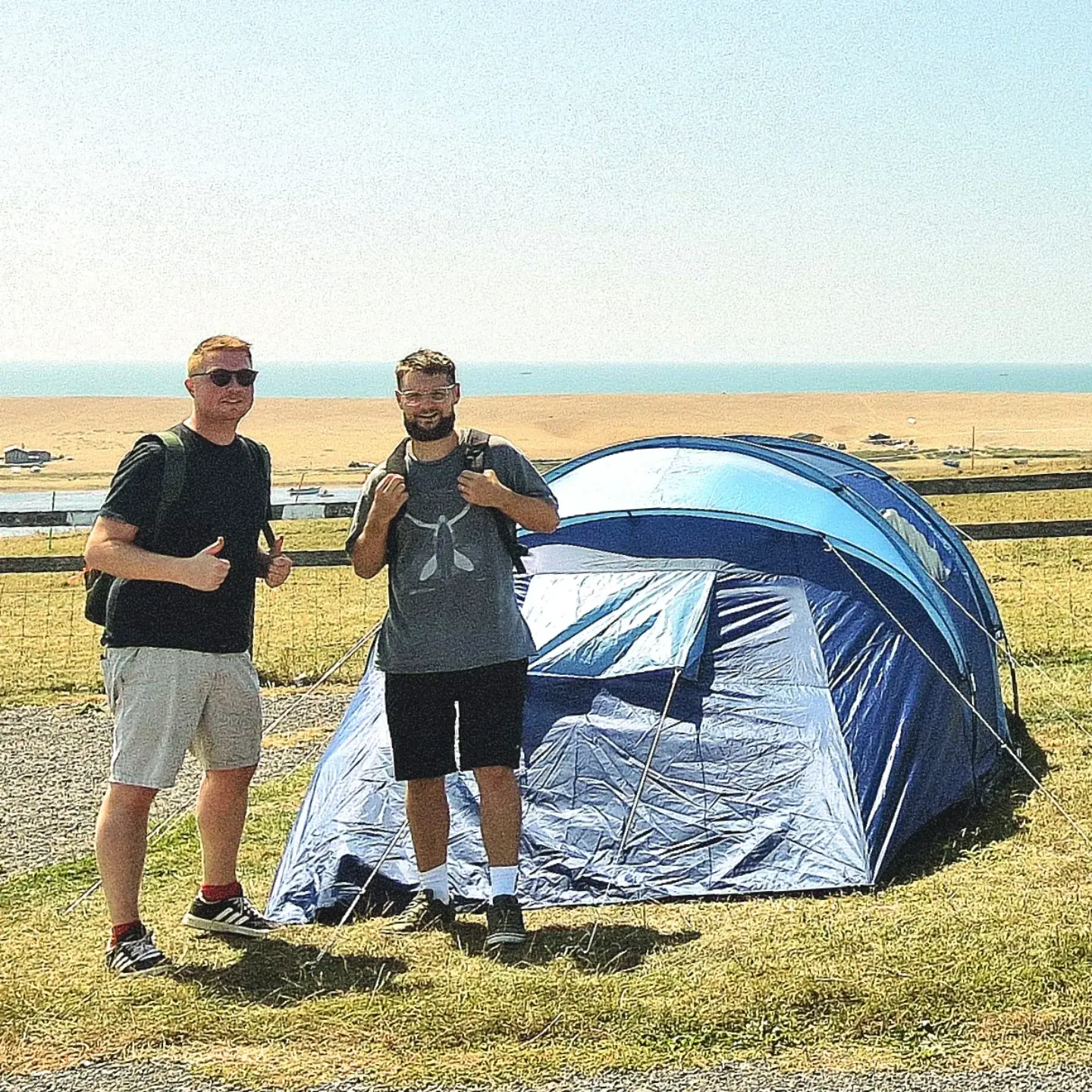
Darren and Alan in Weymouth, Dorset 2025 September 2025
Learning to brew
Over the following months I read everything I could about homebrewing, scoured Facebook Marketplace for the bits I thought I’d need, and discovered a homebrew shop right on my doorstep: The Homebrew Shop in Farnborough.
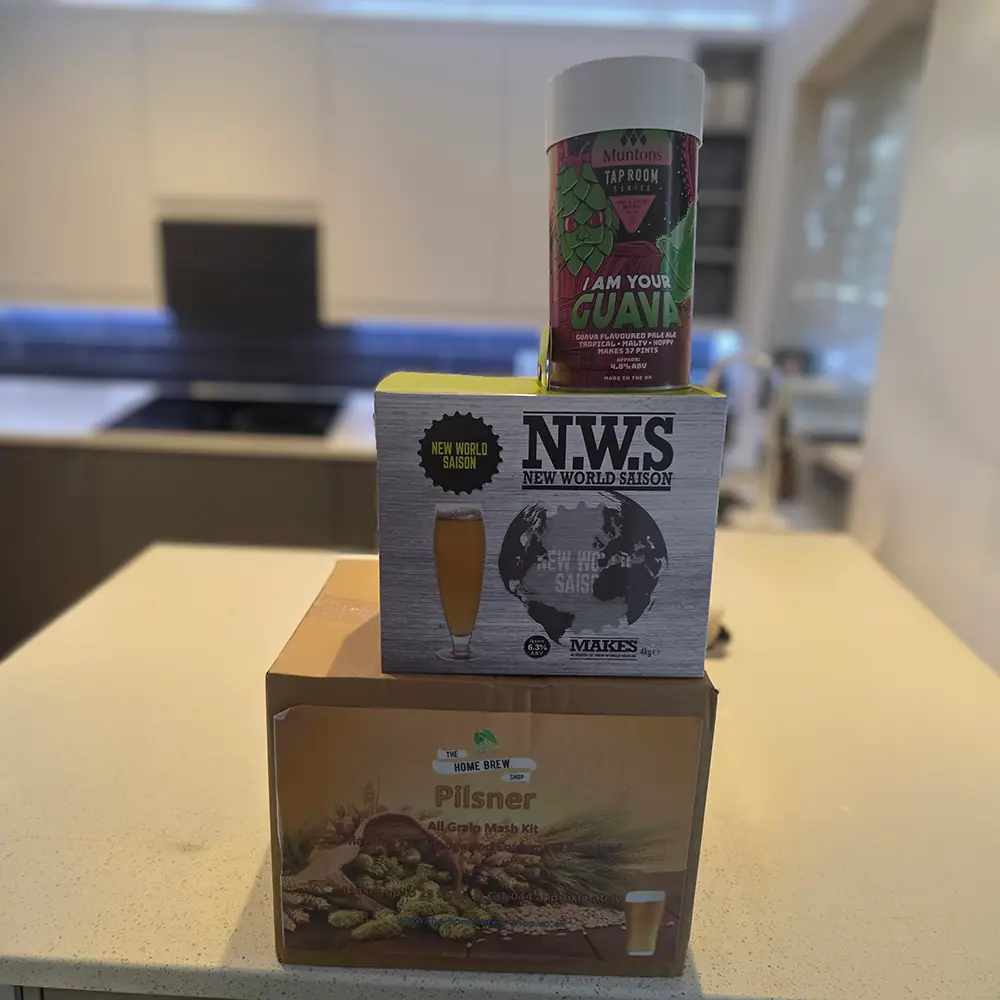
Brew supply haul from The Homebrew Shop Nov 2025 Today
Seeing it through
This website is two things: a memorial to Alan, and our brewing journal. It keeps every brew, everything we learn, and (we suspect) plenty of mistakes.
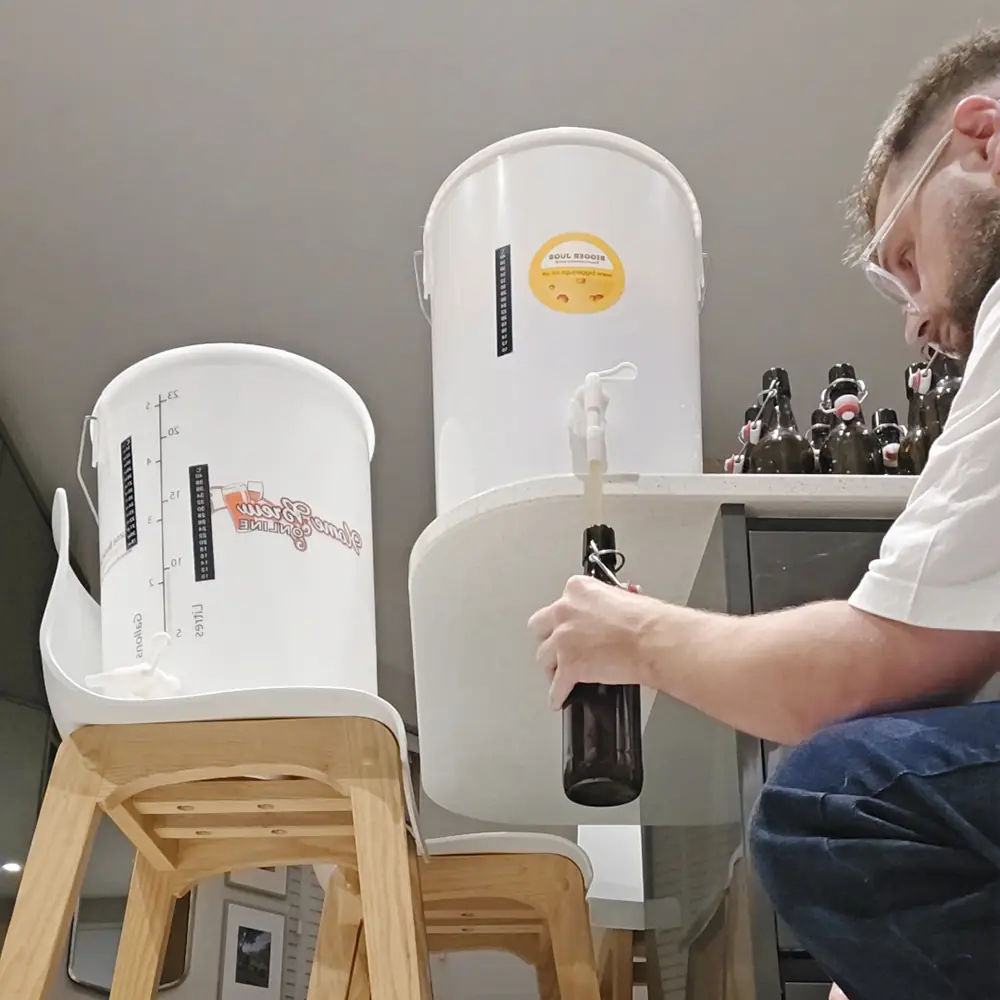
Darren bottling the Saison brew Mar 2026
Why we don’t sell our beer (yet)
The question we hear most is “Can I buy some?” It’s lovely to be asked, and the honest answer is: not yet. There are two good reasons.
The first is that we’re still learning. Every brew teaches us something, and plenty of those lessons are mistakes, like the grain bag that leaked wort all over the bench on our first all-grain brew. That’s half the fun at home, but if you’re paying for a beer, it should taste just as good every time. Getting that consistent, brew after brew, is going to take a while yet.
The second is that selling beer in the UK is complicated. Brewing at home for your own household is free of duty, but the moment one bottle is sold, it becomes a business with licences, tax and food law to answer to.
What it takes to sell a single bottle
Approval from HMRC
Before brewing a drop to sell, a brewer needs an alcoholic products producer approval from HMRC, applied for at least 45 working days before production starts. Once approved, even the beer you drink yourself carries duty.
Alcohol Duty, every month
Duty is charged on every litre of pure alcohol, at a rate set by the beer’s strength, so each batch needs its ABV measured properly. It’s declared on a monthly return and paid to HMRC, and the rates go up most years: the next rise is on 1 February 2027.
Reliefs with their own sums
Small brewers pay less through Small Producer Relief, on beer under 8.5% ABV, as long as they make less than 4,500 hectolitres of pure alcohol a year. Working out your own reduced rate is a calculation in itself, and beer sold in kegs of 20 litres or more gets a further cut through Draught Relief.
A licence to sell
Selling alcohol to the public, online included, needs a premises licence from the local council for the place the beer is sold or sent from. Someone also needs a personal licence, which means an accredited qualification and a criminal record check, to be named as its designated premises supervisor. Licensing a family home is far from simple.
Wholesale registration
To sell to pubs, shops or anyone else who sells it on, a brewery also registers with HMRC’s Alcohol Wholesaler Registration Scheme (AWRS), which checks the business is fit and proper.
Food law
Beer is food, so a brewery registers with the council as a food business at least 28 days before trading, runs a food safety system based on HACCP principles, keeps a record of where every ingredient came from and where every batch went, and gets a food hygiene rating.
The label
Every bottle needs its name, its strength in % vol (accurate to within half a percent for most beers), allergens such as barley, the amount it holds, a best before date, a batch number and the brewer’s name and address, and it has to be filled to the weights and measures rules.
Everything else
Planning permission for a building that wasn’t built as a brewery, business rates, perhaps a permit to pour brewing waste down the drain, a registered waste carrier, fire and health and safety assessments, and VAT once sales pass the threshold.
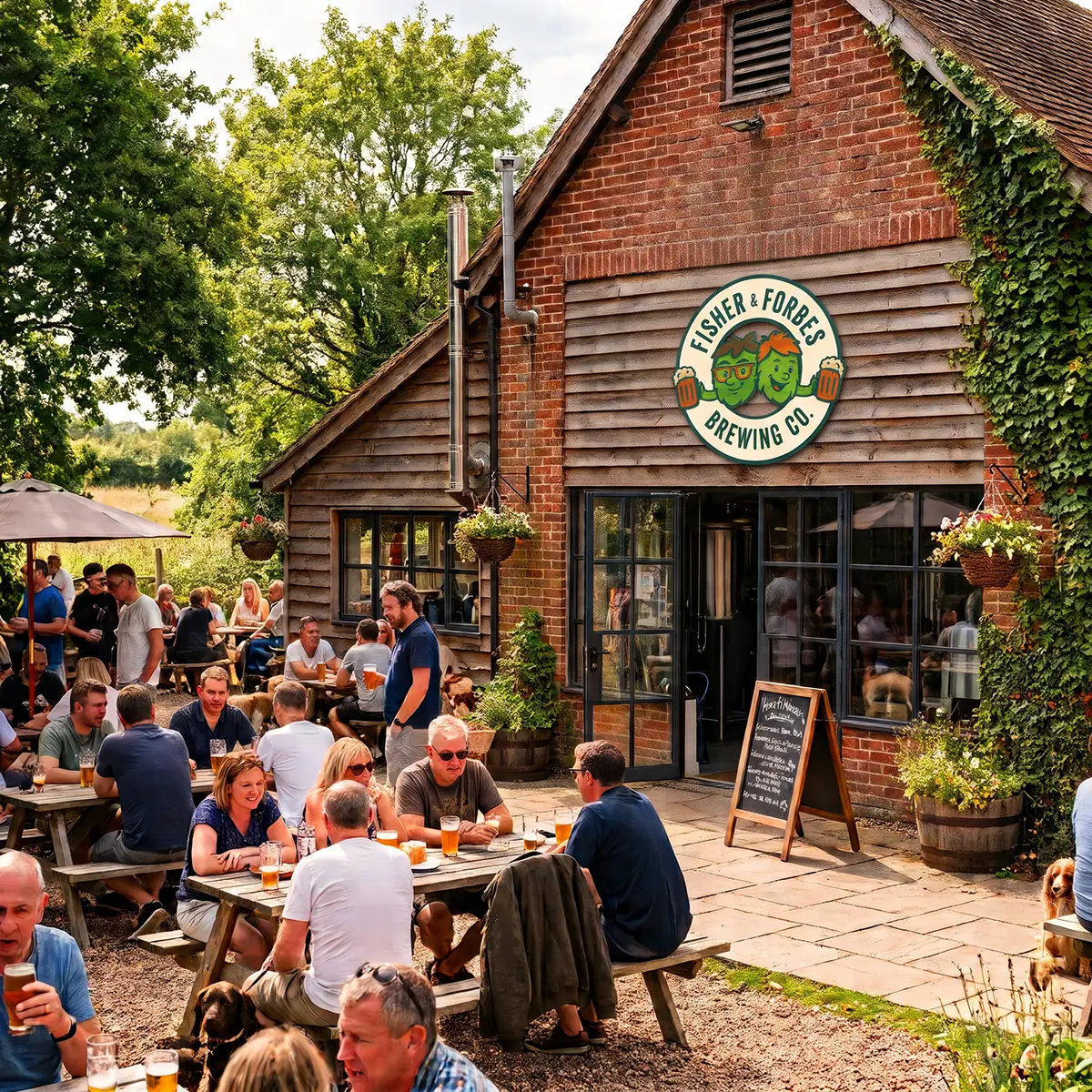
One day
None of it is impossible: plenty of small breweries started out in a garage or a shed. One day, once our beer tastes the same every time and we know the rules inside out, we’d love a little brewery of our own, with a garden where you could sit in the sun with a pint of something we made.
Until then, the best way to support us is to buy us a beer.
 (opens in a new tab)
The kit
When Alan passed away, his father gifted me all of his brewing equipment. He said, “Alan would have wanted you to have it.”
Since then I’ve been steadily growing our brewery’s kit. Here’s a list of what we’ve gathered so far, and where you can purchase your own on Amazon.
Affiliate links: buy through our Amazon links and we earn a small commission, at no extra cost to you. More about affiliate links
-
Klarstein Füllhorn 30L mash kettle, Alan’sUsed in brew 002, Pilot Episode, brew 009, Licence to Pils
Our all-in-one brewing kettle: it heats the mash and boils the wort. Now discontinued and superseded by the Klarstein Maischfest Brew 30.
-
Klarstein Maischfest 25L fermenter, Alan’sUsed in brew 002, Pilot Episode, brew 003, Zing, brew 009, Licence to Pils
Our main fermenter, for full-size batches of up to 25L. The 25L model is no longer sold on Amazon, but I’d recommend the 30L anyway.
-
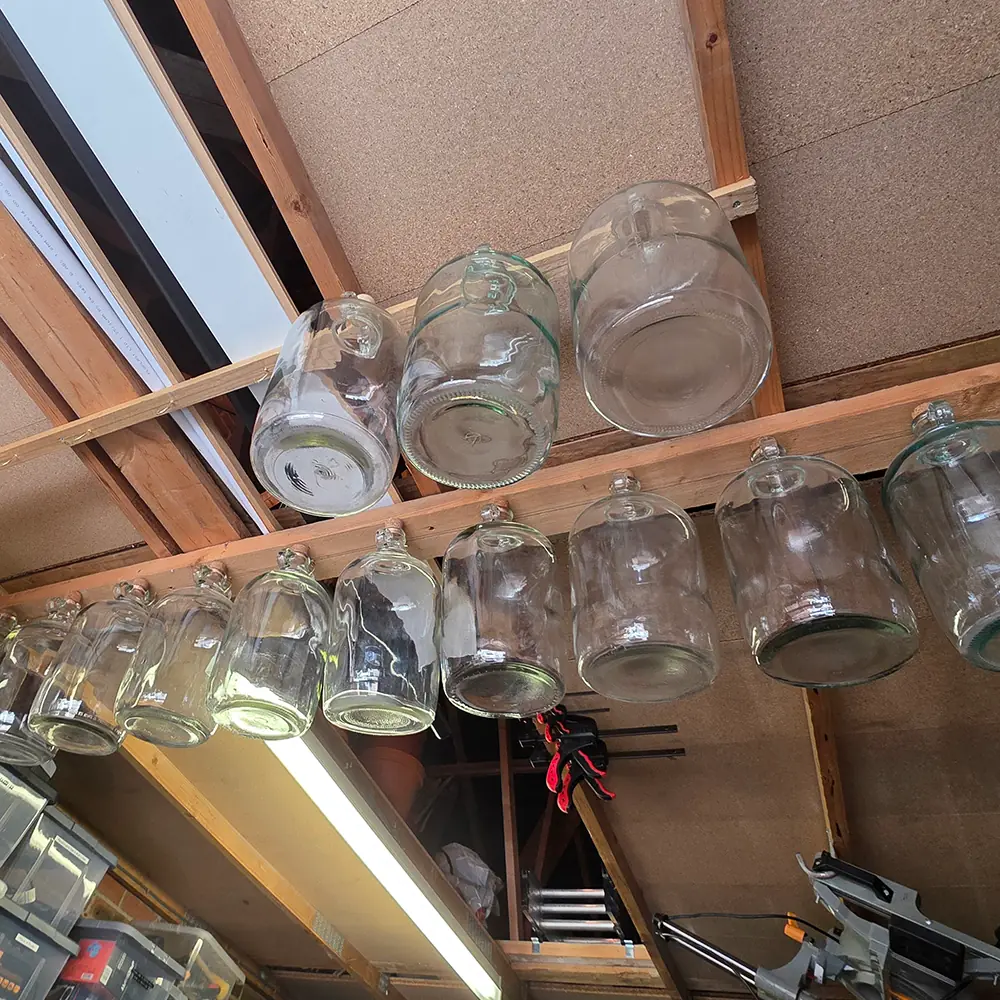
DemijohnsUsed in brew 001, Sauvignon Plonk, brew 010, Bee Cherry
For fermenting small batches, under 5L. Great for experimenting with new ideas.
-
Demijohn corksUsed in brew 001, Sauvignon Plonk, brew 002, Pilot Episode, brew 003, Zing, brew 004, I Am Your Guava, brew 005, If You Saison, brew 006, Ginger Ninja, brew 007, Bargaignon Blanc, brew 008, Dark Soul, brew 009, Licence to Pils, brew 010, Bee Cherry
Keep the demijohns clean between brews, and seal them when they’re full of something that won’t ferment, like sanitiser or finished wine.
-
Grain bag, Alan’sUsed in brew 002, Pilot Episode, brew 009, Licence to Pils
Holds the grain in the kettle while it mashes, then lifts out so the wort can drain through it.
-
Grain bag clipsUsed in brew 002, Pilot Episode, brew 009, Licence to Pils
Hold the grain bag up off the kettle’s heating element, so it can’t scorch.
-
Drilled sparging trugUsed in brew 009, Licence to Pils
A plastic trug with holes drilled in its base: the grain bag sits in it over the kettle while the sparge water is poured through. I made it after Pilot Episode’s bag leaked wort all over the bench. Amazon sells the plain trug: you’d need to drill the holes in its base yourself.
-
Silicone oven glovesUsed in brew 002, Pilot Episode, brew 009, Licence to Pils
For handling the hot grain bag after the mash.
-
Plastic brewing spoon, Alan’sUsed in brew 001, Sauvignon Plonk, brew 002, Pilot Episode, brew 003, Zing, brew 004, I Am Your Guava, brew 005, If You Saison, brew 006, Ginger Ninja, brew 007, Bargaignon Blanc, brew 008, Dark Soul, brew 009, Licence to Pils, brew 010, Bee Cherry
For stirring the mash, the boil and anything else that needs a stir.
-
Nylon hop bags, Alan’sUsed in brew 002, Pilot Episode, brew 003, Zing, brew 005, If You Saison, brew 008, Dark Soul, brew 009, Licence to Pils
Keep hops (and fruit pulp) out of the beer and away from the tap.
-
Hop filter basketUsed in brew 002, Pilot Episode, brew 009, Licence to Pils
For adding hops to the boil without them clogging the kettle’s tap.
-
Glass marblesUsed in brew 002, Pilot Episode, brew 003, Zing, brew 005, If You Saison, brew 009, Licence to Pils
Dropped into the hop and fruit bags to weigh them down in the brew.
-
Digital kitchen scalesUsed in brew 006, Ginger Ninja
For weighing ingredients such as hops and sugar.
-
Food bag clipsUsed in brew 001, Sauvignon Plonk, brew 002, Pilot Episode, brew 003, Zing, brew 004, I Am Your Guava, brew 005, If You Saison, brew 006, Ginger Ninja, brew 007, Bargaignon Blanc, brew 008, Dark Soul, brew 009, Licence to Pils, brew 010, Bee Cherry
For sealing opened bags of grain, hops, sugar and the rest.
-
5L jugUsed in brew 001, Sauvignon Plonk, brew 002, Pilot Episode, brew 003, Zing, brew 004, I Am Your Guava, brew 005, If You Saison, brew 006, Ginger Ninja, brew 007, Bargaignon Blanc, brew 008, Dark Soul, brew 009, Licence to Pils, brew 010, Bee Cherry
For carrying water from the kitchen to the garage, five litres at a time.
-
FunnelsUsed in brew 001, Sauvignon Plonk, brew 007, Bargaignon Blanc, brew 010, Bee Cherry
For getting ingredients into the demijohns through their narrow necks.
-
Stock potUsed in brew 006, Ginger Ninja
For heating and boiling ingredients on the hob, for brews that don’t need the mash kettle.
-
SieveUsed in brew 006, Ginger Ninja
For straining the solids out of a brew on its way into the fermenter.
-
Stainless steel wort chiller, 15mUsed in brew 002, Pilot Episode, brew 009, Licence to Pils
A coil of stainless steel pipe that runs cold tap water through the hot wort, cooling it quickly after the boil.
-
Thermostatic heat beltUsed in brew 002, Pilot Episode, brew 003, Zing, brew 004, I Am Your Guava, brew 005, If You Saison, brew 007, Bargaignon Blanc, brew 008, Dark Soul, brew 009, Licence to Pils, brew 010, Bee Cherry
Wraps round the fermenter to keep it warm when the room is too cold for the yeast.
-
Fermentation fridgeUsed in brew 008, Dark Soul, brew 009, Licence to Pils
For keeping fermentation cool and for cold crashing, with an Inkbird controller holding the temperature.
-
Inkbird temperature controllersUsed in brew 008, Dark Soul, brew 009, Licence to Pils
Switch the fermentation fridge on and off to hold it at the temperature we set.
-
Fermentation buckets, Alan’sUsed in brew 003, Zing, brew 004, I Am Your Guava, brew 005, If You Saison, brew 006, Ginger Ninja, brew 007, Bargaignon Blanc, brew 008, Dark Soul
Plastic buckets with lids, for fermenting a full batch.
-
Bubbler airlocks, Alan’sUsed in brew 001, Sauvignon Plonk, brew 004, I Am Your Guava, brew 005, If You Saison, brew 006, Ginger Ninja, brew 007, Bargaignon Blanc, brew 008, Dark Soul, brew 010, Bee Cherry
S-shaped airlocks that let gas out of the fermenter without letting air (or anything else) in: water sits in the bends and bubbles as the gas escapes, so you can see it working.
-
Three-piece airlocksUsed in brew 002, Pilot Episode, brew 003, Zing, brew 005, If You Saison, brew 009, Licence to Pils
Let gas out of the fermenter without letting air (or anything else) in: a little cap rises and falls on a central tube as the gas escapes, and they come apart for cleaning.
-
Large auto siphon (56cm)Used in brew 001, Sauvignon Plonk, brew 002, Pilot Episode, brew 003, Zing, brew 004, I Am Your Guava, brew 005, If You Saison, brew 006, Ginger Ninja, brew 007, Bargaignon Blanc, brew 008, Dark Soul, brew 009, Licence to Pils, brew 010, Bee Cherry
A pump-action racking cane: one pump starts the flow, then it moves beer from one vessel to another, leaving the sediment behind.
-
Tubing, Alan’sUsed in brew 001, Sauvignon Plonk, brew 002, Pilot Episode, brew 003, Zing, brew 004, I Am Your Guava, brew 005, If You Saison, brew 006, Ginger Ninja, brew 007, Bargaignon Blanc, brew 008, Dark Soul, brew 009, Licence to Pils, brew 010, Bee Cherry
Food-grade tubing for moving wort and beer between vessels.
-
Plastic bottling bucketUsed in brew 001, Sauvignon Plonk, brew 002, Pilot Episode, brew 003, Zing, brew 004, I Am Your Guava, brew 005, If You Saison, brew 006, Ginger Ninja, brew 007, Bargaignon Blanc, brew 008, Dark Soul, brew 010, Bee Cherry
Holds the beer at bottling, with a tap at the bottom for the bottling wand.
-
Thermometers, Alan’sUsed in brew 001, Sauvignon Plonk, brew 002, Pilot Episode, brew 005, If You Saison, brew 007, Bargaignon Blanc, brew 009, Licence to Pils
For checking the temperature of the mash, the wort and the fermenter.
-
Stick-on fermentation thermometersUsed in brew 001, Sauvignon Plonk, brew 002, Pilot Episode, brew 003, Zing, brew 004, I Am Your Guava, brew 005, If You Saison, brew 006, Ginger Ninja, brew 007, Bargaignon Blanc, brew 008, Dark Soul, brew 009, Licence to Pils, brew 010, Bee Cherry
Stuck on the outside of a fermenter, they show the temperature of what’s inside without opening it.
-
Hydrometers, Alan’sUsed in brew 001, Sauvignon Plonk, brew 002, Pilot Episode, brew 003, Zing, brew 004, I Am Your Guava, brew 005, If You Saison, brew 006, Ginger Ninja, brew 007, Bargaignon Blanc, brew 008, Dark Soul, brew 009, Licence to Pils, brew 010, Bee Cherry
Float in a sample to measure its gravity: how much sugar is left, and from that, how strong it is.
-
Bottling wand, Alan’sUsed in brew 001, Sauvignon Plonk, brew 002, Pilot Episode, brew 003, Zing, brew 004, I Am Your Guava, brew 005, If You Saison, brew 006, Ginger Ninja, brew 007, Bargaignon Blanc, brew 008, Dark Soul, brew 010, Bee Cherry
Fits on the bottling bucket’s tap and only lets beer flow when it’s pressed against the bottom of the bottle, so filling is quick and tidy.
-
330ml crown-cap bottlesUsed in brew 005, If You Saison
Bottles sealed with a crown cap, like most beer from the shops.
-
500ml crown-cap bottlesUsed in brew 002, Pilot Episode, brew 005, If You Saison, brew 008, Dark Soul
The larger crown-cap bottles, a little under a pint.
-
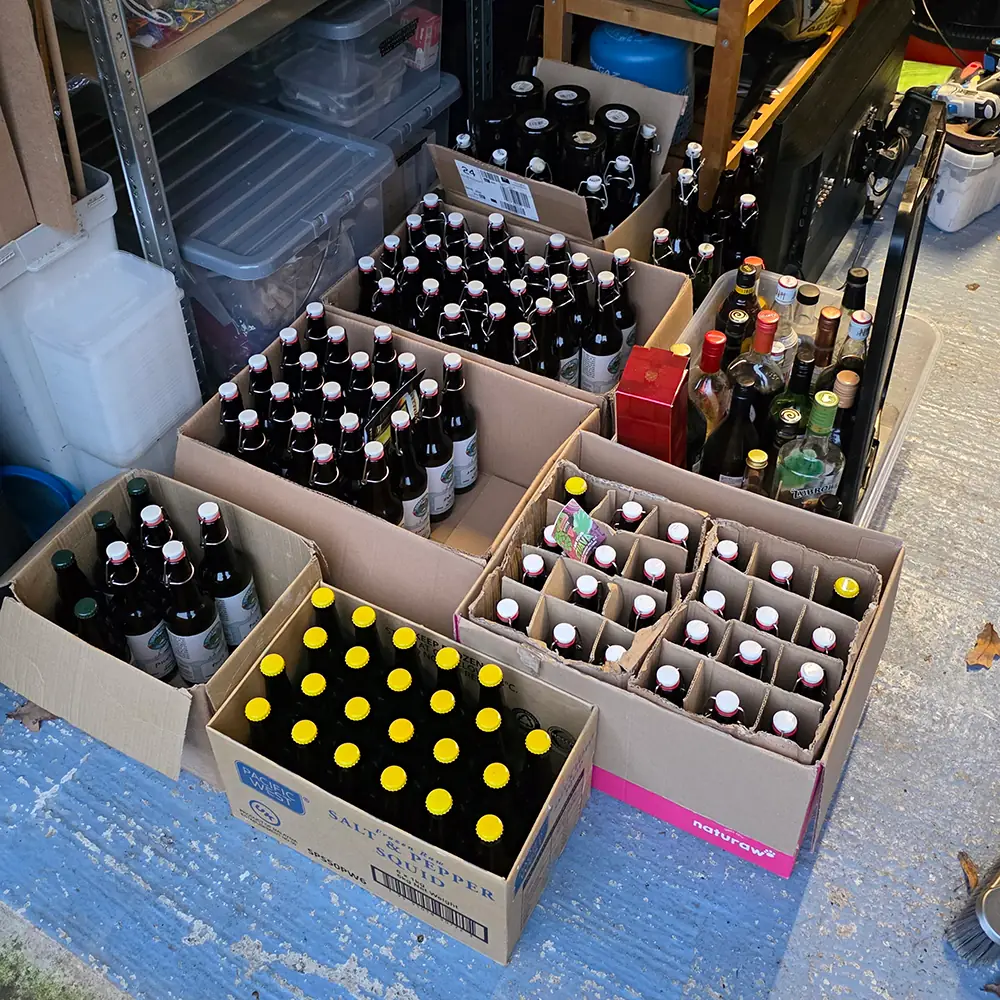
330ml swing-top bottlesUsed in brew 004, I Am Your Guava, brew 010, Bee Cherry
Bottles with a hinged stopper that clips shut: no caps needed.
-
500ml swing-top bottlesUsed in brew 002, Pilot Episode, brew 003, Zing, brew 006, Ginger Ninja, brew 008, Dark Soul
The larger swing-tops, a little under a pint.
-
Swing-top replacement seals
For replacing worn or perished seals on the swing-top bottles.
-
Crown capsUsed in brew 002, Pilot Episode, brew 005, If You Saison, brew 008, Dark Soul
Caps for the crown-cap bottles.
-
Bottle capper, Alan’sUsed in brew 002, Pilot Episode, brew 005, If You Saison, brew 008, Dark Soul
Crimps the crown caps on to the bottles to seal them.
-
Wine degassing toolUsed in brew 001, Sauvignon Plonk, brew 007, Bargaignon Blanc
Fits on a drill and stirs the gas out of wine before it’s cleared and bottled.
-
750ml screw-top wine bottlesUsed in brew 001, Sauvignon Plonk, brew 007, Bargaignon Blanc
Bottles saved from shop-bought wine, sealed with their own screw caps: no corks or corker needed.
-
Wine bottle corksUsed in brew 007, Bargaignon Blanc
For corking the bottles once the wine is finished.
-
VWP cleanserUsed in brew 001, Sauvignon Plonk, brew 002, Pilot Episode, brew 003, Zing, brew 004, I Am Your Guava, brew 005, If You Saison, brew 006, Ginger Ninja, brew 007, Bargaignon Blanc, brew 008, Dark Soul, brew 009, Licence to Pils, brew 010, Bee Cherry
For cleaning and sterilising the equipment before and after every brew. I always rinse it off with hot, clean water, then sanitise.
-
ChemsanUsed in brew 001, Sauvignon Plonk, brew 002, Pilot Episode, brew 003, Zing, brew 004, I Am Your Guava, brew 005, If You Saison, brew 006, Ginger Ninja, brew 007, Bargaignon Blanc, brew 008, Dark Soul, brew 009, Licence to Pils, brew 010, Bee Cherry
For sanitising the equipment and bottles.
-
Spray bottlesUsed in brew 001, Sauvignon Plonk, brew 002, Pilot Episode, brew 003, Zing, brew 004, I Am Your Guava, brew 005, If You Saison, brew 006, Ginger Ninja, brew 007, Bargaignon Blanc, brew 008, Dark Soul, brew 009, Licence to Pils, brew 010, Bee Cherry
I keep Chemsan in these, to spray down anything that needs sanitising while we brew and bottle.
-
Sponge scourersUsed in brew 001, Sauvignon Plonk, brew 002, Pilot Episode, brew 003, Zing, brew 004, I Am Your Guava, brew 005, If You Saison, brew 006, Ginger Ninja, brew 007, Bargaignon Blanc, brew 008, Dark Soul, brew 009, Licence to Pils, brew 010, Bee Cherry
I use these to deep clean the kettle and fermenters, scrubbing off stubborn krausen and sediment.
-
Bottle brush, Alan’sUsed in brew 001, Sauvignon Plonk, brew 002, Pilot Episode, brew 003, Zing, brew 004, I Am Your Guava, brew 005, If You Saison, brew 006, Ginger Ninja, brew 007, Bargaignon Blanc, brew 008, Dark Soul, brew 010, Bee Cherry
For scrubbing out bottles, demijohns and anything else with a narrow neck.
-
Bottle rinserUsed in brew 001, Sauvignon Plonk, brew 002, Pilot Episode, brew 003, Zing, brew 004, I Am Your Guava, brew 005, If You Saison, brew 006, Ginger Ninja, brew 007, Bargaignon Blanc, brew 008, Dark Soul, brew 010, Bee Cherry
Squirts sanitiser up inside each bottle, so every surface inside is covered.
-
Bottle treeUsed in brew 001, Sauvignon Plonk, brew 002, Pilot Episode, brew 003, Zing, brew 004, I Am Your Guava, brew 005, If You Saison, brew 006, Ginger Ninja, brew 007, Bargaignon Blanc, brew 008, Dark Soul, brew 010, Bee Cherry
Holds the sanitised bottles upside down to drain until they’re filled.
-
Dried active yeastUsed in brew 010, Bee Cherry
The yeast is what turns the sugar into alcohol and CO₂: it makes the beer or wine. Dried yeast keeps well, and wakes up once it’s sprinkled on the wort.
-
Yeast nutrientUsed in brew 010, Bee Cherry
Food for the yeast, to help it ferment strongly and cleanly: most useful in wine, cider and mead, as fruit juice and honey have less of what yeast needs than malt.
-
Campden tablets
Crushed and stirred in, they stop wild yeast and bacteria in fruit juice and wine, and clear the chlorine from tap water before it’s used for beer.
-
BentoniteUsed in brew 010, Bee Cherry
A fine clay that clears wine: stirred in, it gathers up the proteins that make it hazy and settles to the bottom with them. Wine kits often come with a sachet, as our Sauvignon Plonk’s did.

Please raise a glass in memory of Alan
Here’s to you, Alan