The numbers
- Original gravity
- 1.068
- Final gravity
- 0.996
- ABV
- 9.5%
- Batch size
- 4.5L
- Per 100ml, estimated
- 61kcal
- Per 330ml bottle, estimated
- 200kcal
ABV comes from our hydrometer readings. Calories are worked out from the gravities. Anything marked estimated is a calculation rather than a measurement.
Brew day
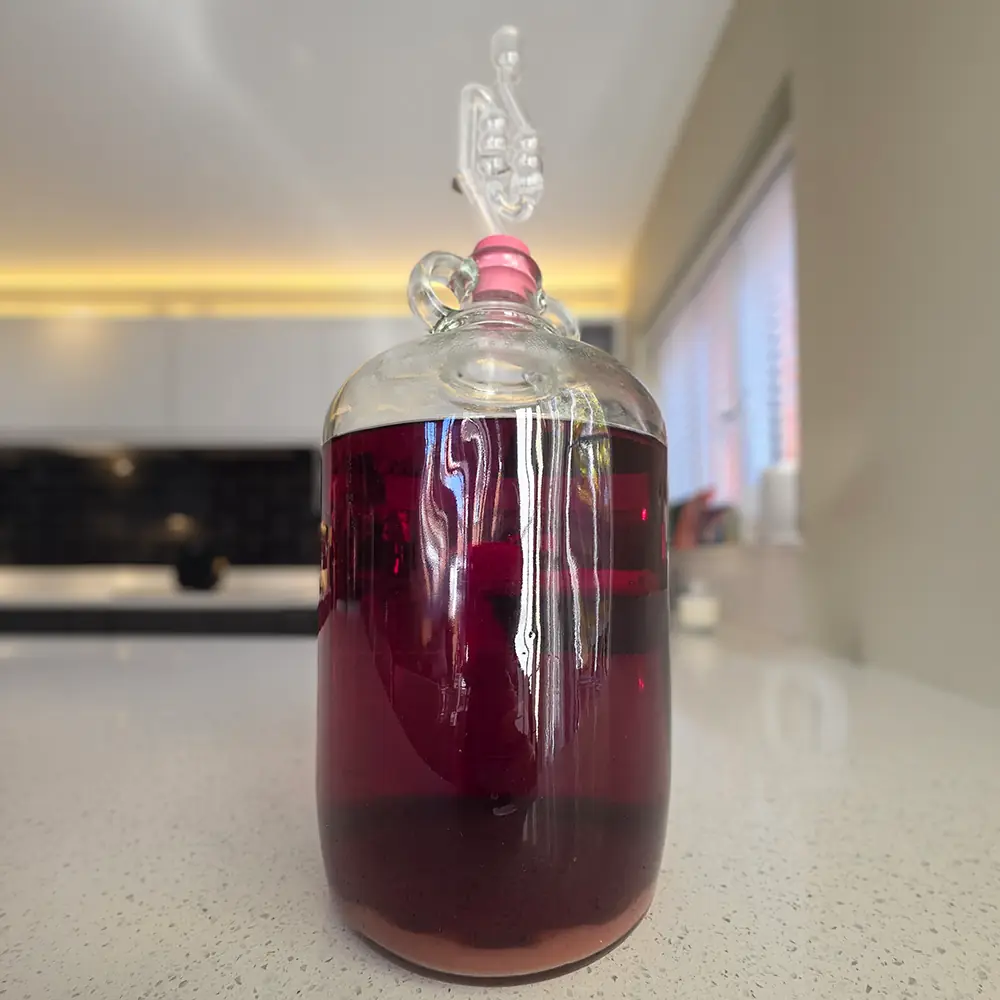
A cyser is somewhere between a cider and a mead: apple juice fermented with honey. This one adds sour cherry, and it comes straight from a video by Rainford’s Brew Lab, How To Make 9.3% Sparkling Sour Cherry Cyser (opens in a new tab). Everything in it came from the supermarket: 3 litres of Morrisons apple juice, a litre of CherryGood cherry juice and a 454g jar of Lidl runny honey, plus a teaspoon of yeast nutrient and half a teaspoon of Mangrove Jack’s M08 Premium Cider Yeast.
Brew day
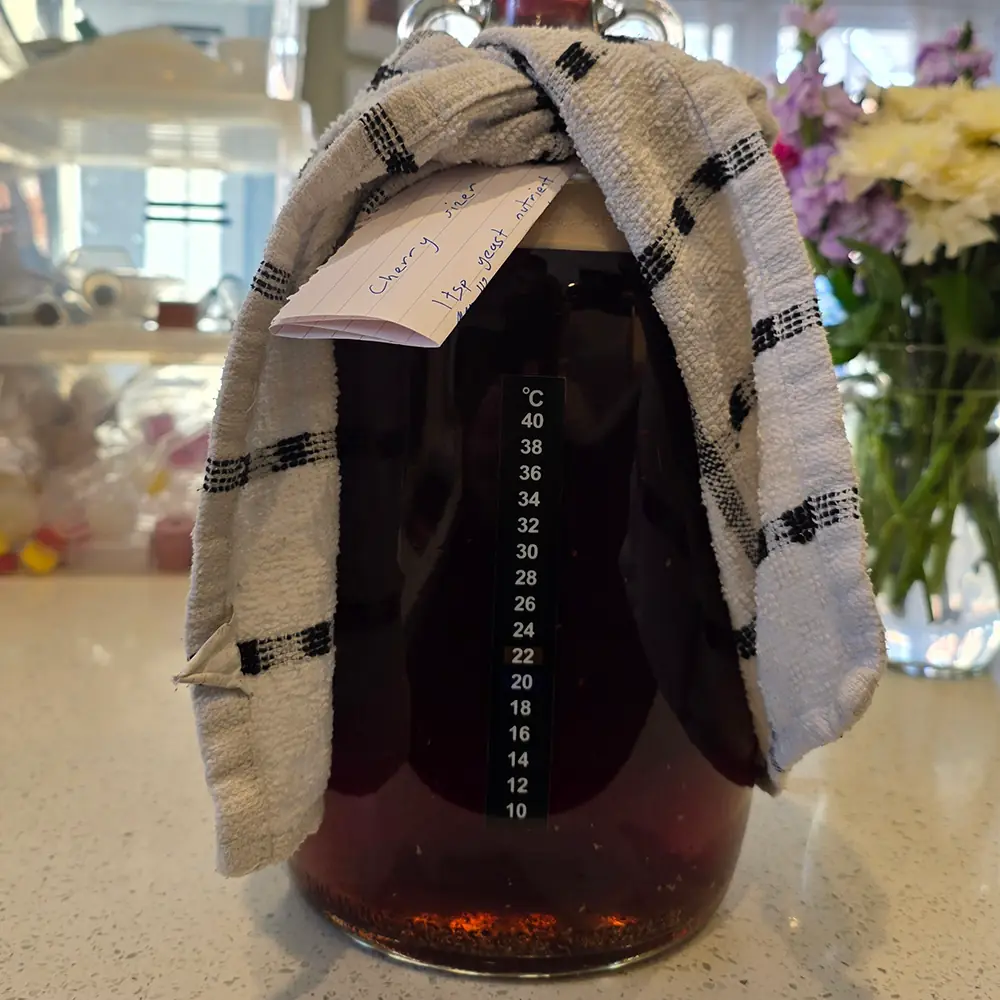
I followed the video, and it was surprisingly easy. Into a sanitised demijohn, through a funnel, went a litre of the apple juice, then the honey, with a good shake to dissolve it, and a splash more apple juice to rinse the last of the honey out of the jar. Then the rest of the apple juice, the cherry juice and the yeast nutrient, and another shake and stir. The video’s brew started at about 1.072; ours read 1.068. The yeast went on top, an airlock went in, and the demijohn sat at 20°C on the heat belt, under a tea towel to keep the light off and the warmth in.
Clearing
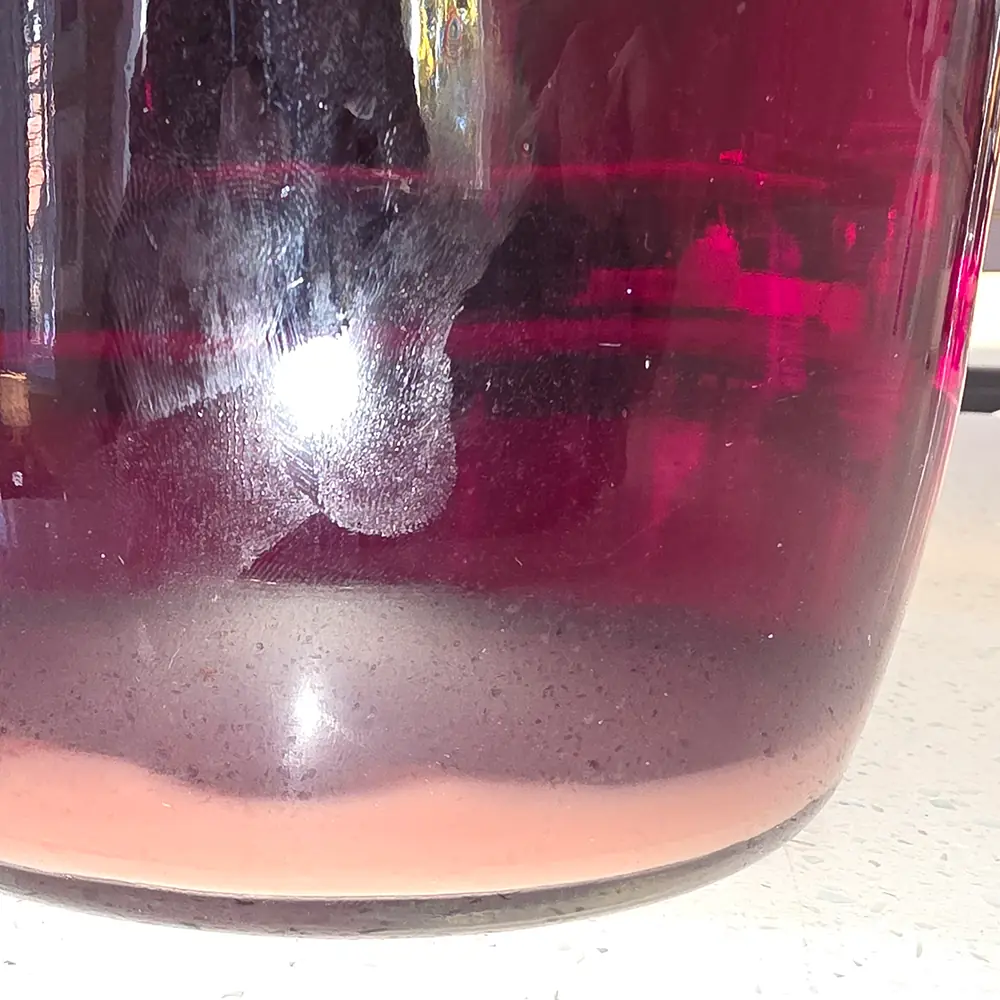
By 7 November it read 0.996, well below the video’s 1.001, so I racked it into a fresh demijohn, off the sediment, and stirred in a quarter of a teaspoon of bentonite to clear it.
Still 0.996 on 15 November, it went into eleven 330ml swing-top bottles with a carbonation drop in each. That works out at about 9.5% ABV, a touch stronger than the video’s 9.3%, and a long way past the 7% it was aiming for.
What it cost
The whole batch cost £8.36: £4.50 of apple juice, £2 of cherry juice, £1.24 of honey, and the last 62p on yeast, nutrient and bentonite. That’s about £1.86 a litre, or 76p for each 330ml bottle, for something nearer wine strength than cider.
It should be ready to drink around 6 December. If it’s as good as I think it’s going to be, we’ll brew it again, and probably a bigger batch.
More photos
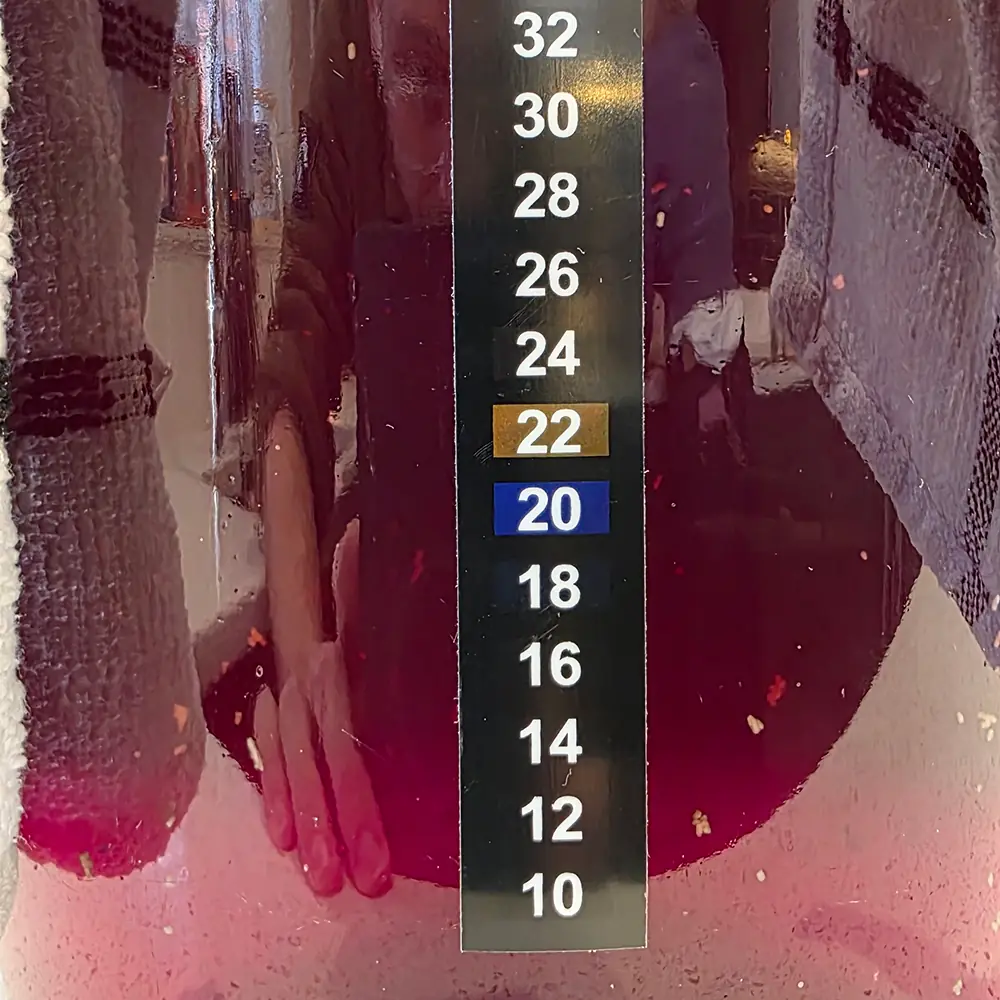
Holding at 20°C, 2026 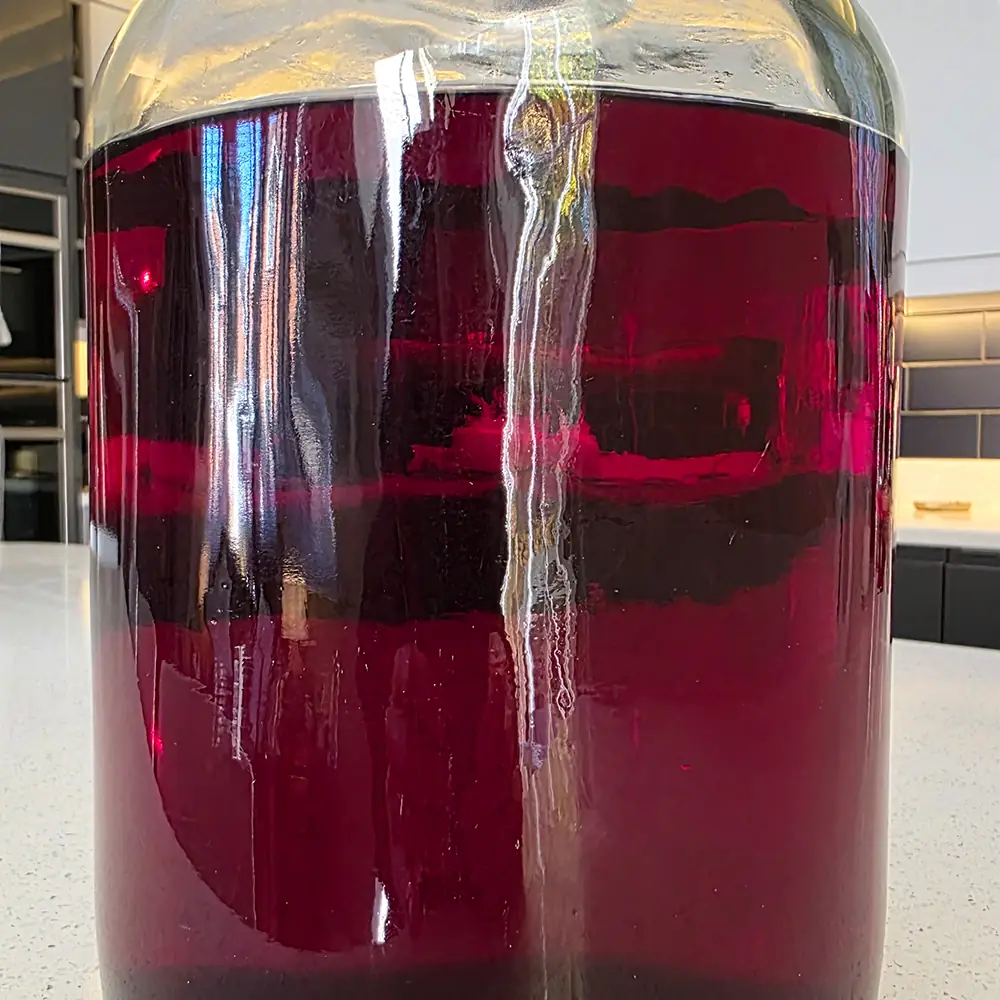
That colour, 2026
From start to bottle (21 days)
- 1.068Brew day, 25 October 2026
- 0.996Day 13, 7 November 2026: fermentation finished; racked and fined
- 0.996Day 21, 15 November 2026: steady; bottled
- Bottled: day 21
Recipe
| Ingredient | Amount | When |
|---|---|---|
| Lidl runny honey | 454g | Fermenter |
| Mangrove Jack’s M08 Premium Cider Yeast | ½ teaspoon | Pitched |
| Morrisons apple juice | 3 litres | Demijohn, a litre first to rinse the honey in, then the rest |
| CherryGood cherry juice | 1 litre | Demijohn |
| Yeast nutrient | 1 teaspoon | Before the yeast |
| Bentonite | ¼ teaspoon | Clearing, 7 November, after racking into a fresh demijohn |
- Fermentation
- 20°C for 13 days, then clearing for 8 days
- Priming
- Carbonation drops, 1 per bottle
- Bottles
- 11 × 330ml
Tasting notes
- 15 November 2026Before bottling, and fantastic: sour, sweet, and loads of cherry. I can’t pick out the honey much. It should only get better with carbonation and time to condition.
- Brew it again?
- Yes
Kit used
- Demijohns
- Demijohn corks
- Plastic brewing spoon, Alan’s
- Food bag clips
- 5L jug
- Funnels
- Thermostatic heat belt
- Bubbler airlocks, Alan’s
- Large auto siphon (56cm)
- Tubing, Alan’s
- Plastic bottling bucket
- Stick-on fermentation thermometers
- Hydrometers, Alan’s
- Bottling wand, Alan’s
- 330ml swing-top bottles
- VWP cleanser
- Chemsan
- Spray bottles
- Sponge scourers
- Bottle brush, Alan’s
- Bottle rinser
- Bottle tree
- Dried active yeast
- Yeast nutrient
- Bentonite